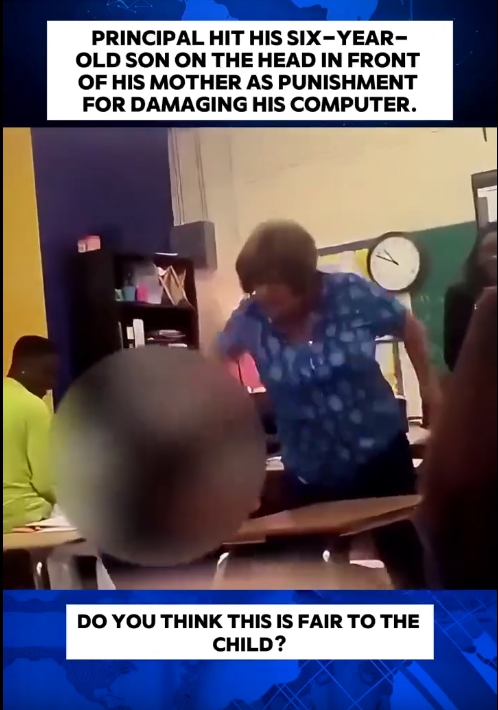
The image is disturbing: a principal, an authority figure entrusted with the care and education of children, striking his own six-year-old son on the head in front of the child’s mother. The offense? The child damaged a computer. The punishment? A blow to the head. This incident is not merely a parenting failure; it is a profound betrayal of trust, a violation of basic human decency, and a disturbing display of misplaced power that demands serious scrutiny.
At its most fundamental level, this act represents a complete breakdown of appropriate discipline. A six-year-old child is in the earliest stages of cognitive and emotional development. At this age, children are impulsive, curious, and prone to accidents. They do not always understand the consequences of their actions, nor do they possess the fine motor control or foresight of adults. Damaging a computer, while frustrating for a parent, is not an act of malice. It is a mistake. It is a learning opportunity. It is certainly not a crime that warrants physical violence, especially violence directed at the most vulnerable part of the body—the head.
The location of this incident adds another layer of gravity. This man is not just a parent; he is a school principal. He holds a position of immense authority and responsibility within his community. Parents entrust their children to his care every day, believing that he will protect them, guide them, and model appropriate behavior. When a principal strikes a child, even his own, he sends a devastating message to every student, parent, and teacher in that school. He signals that violence is an acceptable response to frustration. He undermines the very values that schools are supposed to teach: respect, self-control, and non-violent conflict resolution. How can he expect students to follow school rules against hitting when he himself engages in the same behavior?
The presence of the mother during this incident is particularly troubling. Whether she was a witness or an active participant, the dynamic is deeply concerning. If she stood by and allowed the violence to occur, questions must be raised about the family environment. If she objected and was ignored, then the incident becomes even more disturbing, revealing a man who disregards the concerns of his child’s other parent. In either case, the child witnessed his parents failing to protect him, which can cause lasting psychological harm. Children learn about relationships and safety from their parents. When one parent is the source of harm and the other is powerless to stop it, the child’s sense of security is shattered.
Research consistently shows that physical punishment, particularly hitting the head, is not only ineffective but also harmful. Studies have linked corporal punishment to increased aggression, anxiety, depression, and antisocial behavior in children. Hitting a child on the head carries additional risks, including the potential for concussion, brain injury, or other long-term neurological damage. A six-year-old’s skull is still developing. A blow that might seem minor to an adult can have serious consequences for a young child.
Some might argue that parents have the right to discipline their children as they see fit, and that this incident is a private family matter. This argument fails on multiple levels. First, the right to discipline does not include the right to cause harm. Second, when a child is involved and the perpetrator holds a public position of authority, the matter ceases to be purely private. Schools have a duty to ensure that their employees are fit to work with children. A principal who hits his own child in anger raises serious questions about his judgment, temperament, and suitability for his role.
In conclusion, this incident is a damning indictment of a man who should have known better. He failed his son, he failed the mother, and he failed the community that trusted him. No computer, no matter how expensive, justifies striking a child. Discipline should teach, not traumatize. It should build trust, not destroy it. The principal must face consequences for his actions, and more importantly, he must do the hard work of understanding why he reacted with violence and what he can do to change. His son deserves nothing less.