The Unlikely Artifact That Upended a Decades-Old Legal Battle
There is a peculiar power in the written word, a permanence that outlasts memory, testimony, and sometimes even justice itself. In the annals of criminal history, few discoveries are as haunting as the last letter—a piece of correspondence written in the final moments of clarity, tucked away and forgotten, only to emerge decades later with the weight to overturn everything. This is the story of one such letter, a final, desperate missive that revealed new evidence and irrevocably altered the fate of a woman whose life had been defined by tragedy and wrongful accusation.
The case in question had been closed for over twenty years. The woman, whose name has been withheld pending further judicial review, was convicted in the early 2000s of a crime that shocked her small Midwestern community. She was found guilty of orchestrating the death of her estranged husband, a prominent local businessman whose body was discovered in a remote wooded area. The prosecution’s case was built on circumstantial evidence: a life insurance policy, a history of marital discord, and the testimony of a single key witness who placed her at the scene. There was no murder weapon, no DNA evidence, and her alibi was deemed weak. Yet the jury convicted her, and she was sentenced to life in prison without the possibility of parole.
For two decades, she maintained her innocence. She wrote letters from her cell, filed appeals that were repeatedly denied, and watched as her children grew up without her. The legal system had failed her, or so it seemed. But then, in the autumn of 2025, a discovery was made that would rewrite history.
A final letter, written by her husband just days before his disappearance, was uncovered in the attic of his childhood home. The property had been sold and was being cleared out by new owners when a box of old documents was found behind a wall, hidden in a space that had been sealed during a renovation. Among the papers—financial records, old photographs, and personal correspondence—was a sealed envelope addressed to the woman’s attorney. The letter was dated three days before the husband’s death and bore his unmistakable handwriting.
The contents of the letter were shocking. In it, the husband confessed to fabricating evidence against his wife. He admitted to staging his own disappearance, intending to frame her for his murder so he could start a new life abroad with a significant amount of money he had embezzled from his own business. He detailed his plans: he had hired a man to impersonate him in a series of public sightings, he had planted false documents in their shared home, and he had coached the key witness—his business partner—to provide false testimony. But something went wrong. His letter suggested that the man he hired to help him vanish had double-crossed him, and he feared for his life. He wrote that he was going into hiding and that if his wife was ever convicted, this letter should be used to exonerate her. He never expected to die—and indeed, his death was later ruled a homicide, though the identity of his killer remains unsolved.
But the letter was never sent. It was hidden, perhaps by the husband’s accomplices, perhaps by the husband himself in a moment of paranoia. For twenty-two years, it sat in a dusty box, forgotten by time, waiting to speak the truth.
When the new owners found the letter, they contacted the local police, who in turn informed the woman’s legal team. The defense immediately filed an emergency motion for a new trial, presenting the letter as newly discovered evidence. The prosecution fought it, arguing that the letter could have been forged, that the handwriting could have been imitated. But forensic experts were brought in. They analyzed the ink, the paper, and the handwriting with advanced technology that did not exist when the original trial took place. The results were conclusive: the letter was authentic. It was written by the husband, in his own hand, on paper that matched the stationery found in his office.
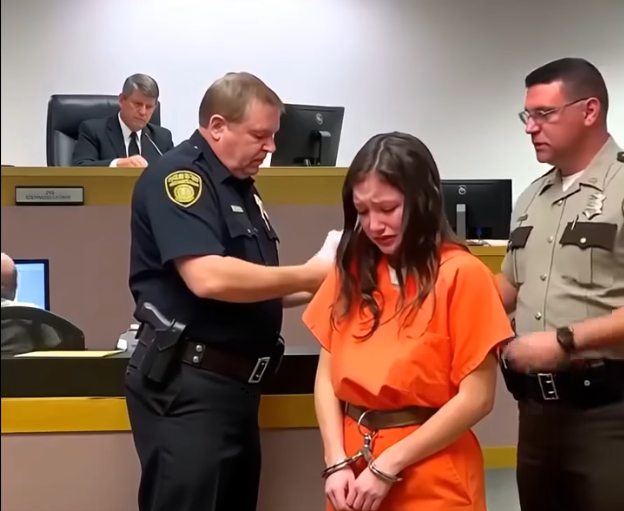
The legal battle that followed was swift but intense. The woman, now in her sixties, frail from years of incarceration, was brought before a judge in a hearing that gripped national attention. Her children, now adults with families of their own, sat in the front row, their eyes filled with a mixture of hope and anguish. The prosecution conceded that the letter raised significant doubts about the conviction, but they argued that the husband could have been coerced into writing it. The judge, however, was unmoved. He noted that the letter was consistent with other documents found in the box, that it contained specific details that only the husband could have known, and that it directly contradicted the testimony of the key witness—who, it turned out, had died years earlier, taking his secrets to the grave.
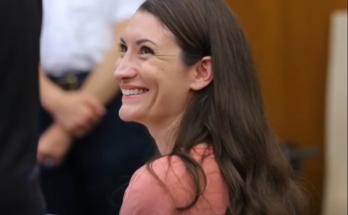
In a dramatic ruling, the judge vacated the woman’s conviction, ordering her immediate release pending a new trial. The state, facing the prospect of re-prosecuting a case that had lost its star witness and now had exculpatory evidence, chose to dismiss the charges altogether. The woman walked out of the courthouse a free person, her name cleared, her innocence finally recognized after more than two decades of suffering.
But the story did not end with her release. The final letter had ripple effects that extended far beyond her individual fate. The case reopened investigations into the husband’s death, and new leads emerged. The business partner who had testified against the woman was posthumously implicated in a conspiracy, and evidence surfaced that he had orchestrated the husband’s murder to prevent the truth from coming out. The woman’s conviction, it turned out, had been the cornerstone of a cover-up that protected powerful people. The letter had cracked open a case that the authorities had long considered closed.
The woman, now free, has become a symbol of the injustices that persist in the criminal justice system. She has spoken publicly about her experience, advocating for prison reform and the use of advanced forensic technology in evaluating old cases. Her story has inspired legislation in several states that expands access to post-conviction DNA testing and document analysis.
Her final letter, the one that changed everything, now sits in a museum of justice, a testament to the enduring power of truth. It serves as a reminder that hope is never truly lost, that evidence can surface when it is least expected, and that a single piece of paper can overturn the mightiest of judgments.
For the woman, the letter was not just an exoneration; it was a return to life. She has been reunited with her children, has met her grandchildren for the first time, and is learning to navigate a world that moved on without her. The years she lost can never be recovered, but the letter gave her back something invaluable: the chance to live the rest of her life free, with her name cleared, and her fate finally, irrevocably, changed.