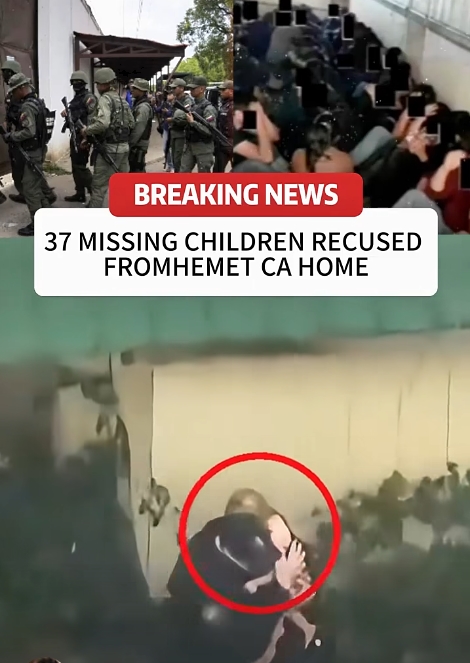
A shocking headline recently swept across social media: “37 missing children rescued from a Hemet, California home.” The story, which spread like wildfire, described a dramatic rescue operation involving federal agents and dozens of traumatized children found in captivity. It is the kind of story that stops you mid-scroll—a nightmare scenario that feels both horrifying and, tragically, believable in today’s world. But as with so many viral sensations, the truth is far more complicated and requires careful examination.
Let me be direct with you: the Hemet Police Department has officially confirmed that the story of 37 missing juveniles being found in a Hemet home is completely false. After reviewing the social media claims and consulting with the Riverside County Sheriff’s Department, authorities stated unequivocally that “no residence in the City of Hemet was involved in this incident”. The department urged the public to verify information through official sources before sharing it further, a plea that speaks to how quickly misinformation can take hold and cause real damage.
So where did this story come from? The confusion appears to stem from a real, significant operation that took place in Southern California during the first week of March 2026. Operation Safe Return, led by the U.S. Marshals Service with support from the Riverside County Sheriff’s Department and other agencies, successfully located 50 missing children, not 37. This was a genuine and commendable effort that reunited dozens of vulnerable children with their families or connected them with appropriate services. Some of the children had been missing for extended periods, with reports suggesting periods ranging from one month to two years.
Some online reports also referenced a coordinated intervention that led to seven arrests, including one individual charged with child sex trafficking. This real operation involved multiple federal agencies, including the FBI, Homeland Security, and the U.S. Secret Service. The seriousness of the crimes involved—organized criminal networks exploiting vulnerable children—is deeply concerning and deserves attention.
But the crucial detail is location. While the operation occurred in the broader Riverside County area near Hemet, the specific claim that a single Hemet home contained 37 missing juveniles is inaccurate. It appears that details from a real rescue operation were distorted, exaggerated, and misattributed to a specific address as the story passed through social media channels.
This incident serves as a powerful reminder of a modern reality: viral misinformation can spread faster than the truth. When we see a shocking headline, our instinct is to share it immediately, driven by outrage or concern. But this impulse can be dangerous. False claims can cause panic, damage reputations, and waste law enforcement resources as officials are forced to respond to debunked rumors. The families of missing children also suffer when misinformation diverts attention from real cases.