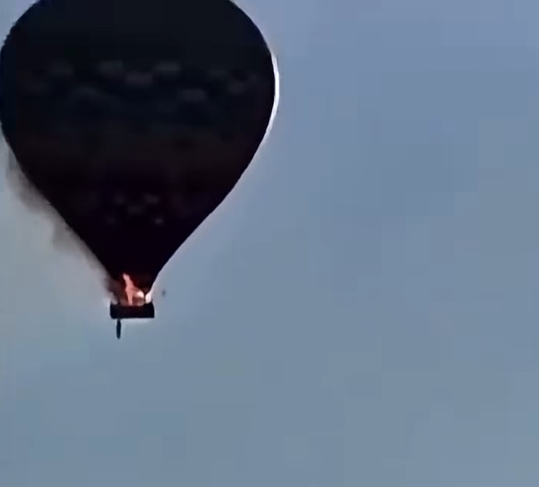
The image of a hot air balloon drifting peacefully across the sky is one of serenity and adventure. But when fire breaks out at altitude, that tranquility shatters into terror. Recent tragedies in Brazil, alongside other major incidents globally, reveal the devastating speed with which a pleasure ride can become a fight for survival.
The 2025 Brazil Tragedy
The most recent catastrophic event occurred in Praia Grande, Santa Catarina, Brazil, on June 21, 2025. A hot air balloon carrying 21 people caught fire mid-flight and crashed, resulting in eight fatalities and 13 survivors.
Videos captured by witnesses showed the balloon engulfed in flames as it hurtled toward the ground, with some passengers forced to jump from the burning basket to escape the fire.
The sequence of events was chaotic and horrifying. According to police, a fire started in the basket—possibly from a backup burner that reignited. The pilot immediately attempted an emergency landing and urged passengers to jump when the balloon was close to the ground. Thirteen people, including the pilot, managed to escape by jumping out. However, with that weight removed, the balloon rose sharply back into the sky, carrying the remaining passengers higher.
For those left behind, the outcome was fatal. According to the fire department, of the eight who died, four were burned to death, and four others perished from injuries sustained in the fall. The scene was so traumatic that police described a sight that “hurts the soul,” noting that three of the victims were found dead “hugging each other”.
The pilot blamed a blowtorch left in the basket, which he believed reignited and sparked the fire. Brazilian authorities launched an investigation to determine the official cause, with early focus on potential technical failures or human error.
A Pattern of Disaster
This event was not an isolated incident. It occurred less than a week after another fatal balloon accident in São Paulo state killed a 27-year-old woman. This pattern has raised serious concerns about safety regulations for Brazilian ballooning operators.
Comparisons to Other Major Crashes
The aviation industry has seen several similar tragedies.
-
The 2013 Luxor, Egypt Disaster: This is the deadliest hot air balloon accident in history, in which 19 tourists died near the ancient city of Luxor. A gas cylinder exploded on board, setting the balloon ablaze. In a grim parallel to Brazil, some of the 21 passengers jumped from the balloon at fatal heights, while others were burned alive. A subsequent report blamed “grave” pilot error for the gas leakage that preceded the fire.
-
The 2016 Texas Crash: In the U.S., the deadliest incident occurred near Lockhart, Texas, in 2016, when a hot air balloon caught fire and crashed, killing all 16 people on board.
The Common Thread
These tragedies share harrowing similarities: a sudden fire at altitude, the impossible choice between burning or jumping, and the failure of emergency systems that were supposed to protect passengers. While global regulators typically require rigorous maintenance and pilot training, accidents expose the gaps that remain.
For the families and friends of the eight who died in Brazil, the investigation will provide some answers, but it cannot undo the memory of how quickly a moment of joy transformed into unimaginable loss.