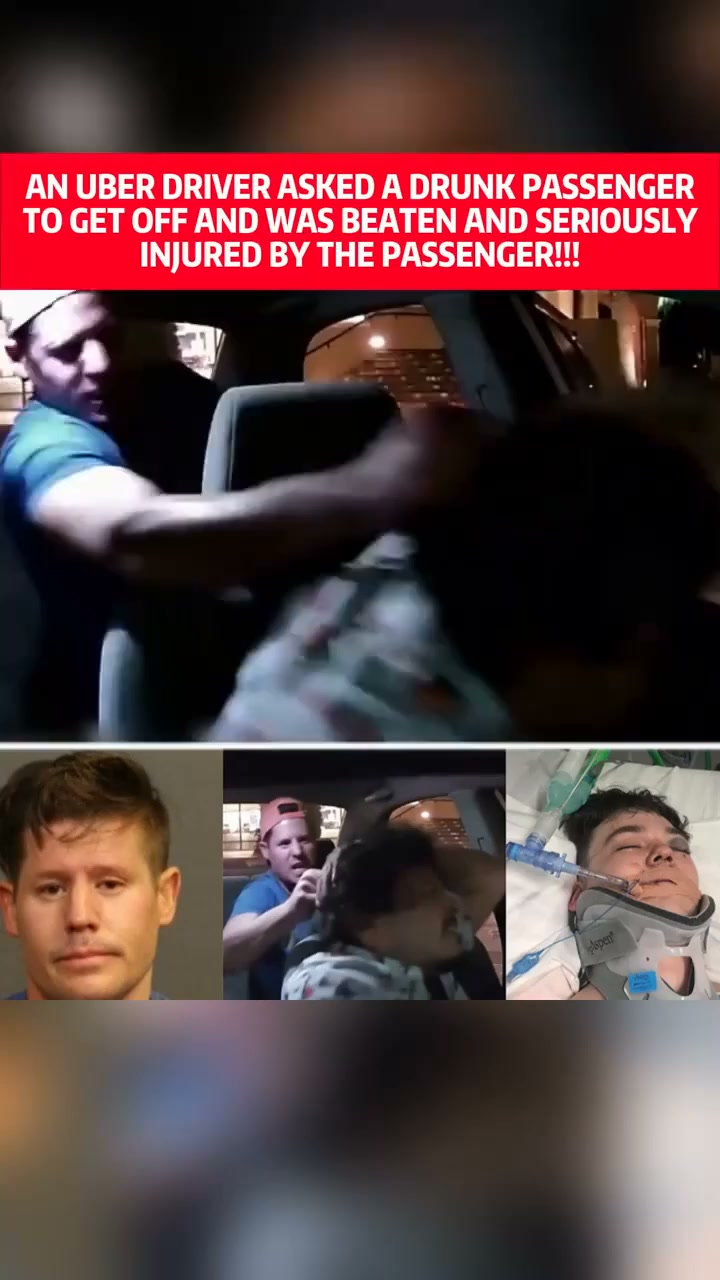
A routine ride-share trip turned into a nightmare when an Uber driver, after asking a drunk passenger to leave his vehicle, was brutally beaten and seriously injured. The incident, captured on dashcam footage, highlights the dangers ride-share drivers face daily.
In Newport Beach, California, driver Edward Caban picked up a passenger near a popular bar and restaurant. The passenger, later identified as Benjamin Golden, was described by Caban as “incredibly intoxicated,” belligerent, and aggressive. He refused to provide his full address, insisted on directing the driver, and would not wear his seatbelt.
When Caban felt unsafe, he pulled into a well-lit parking lot and asked the passenger to get out. The situation then turned violent. The passenger began viciously attacking Caban, slapping him, beating him over the head, and dragging him backward by his hair.
Caban managed to break free and used pepper spray he had kept ready, spraying his attacker in the face until he finally exited the vehicle. Caban then followed the passenger out, recording the scene and stating, “Yeah, that’s what happens. You got maced, motherf*****” .
Police arrived and arrested the passenger, charging him with assault on a cab driver and public intoxication. While Caban had a camera in his vehicle due to previous issues, this was the first time he had been attacked. He later stated he no longer felt safe driving for Uber, saying, “The quality of passengers has gone down over the last couple weeks” .
This case is not an isolated incident. Similar events across the country show a pattern of riders becoming violent, often when intoxicated. One passenger sued Uber after claiming a driver beat, stomped, and kicked him unconscious, breaking bones in his face because the driver refused to take him from Philadelphia to New Jersey. In another instance, an Uber driver was arrested for stabbing a passenger at Boston’s Logan Airport, allegedly without provocation. A separate stabbing incident in Connecticut involved the driver claiming self-defense.
As ride-share services have grown in popularity, such confrontations have become a major concern. A rideshare driver reported a visibly intoxicated woman who yelled and screamed at him and, after refusing her advances, tried to accuse him of harassment. A Texas driver was attacked with boxes of tacos by a passenger who refused to leave her vehicle. Another driver in South Carolina was sued for headbutting and punching a passenger who asked to cancel a ride because the driver refused to take a dog. Reports in other countries, such as Russia, also document disputes over routes turning into violence.
Many of these incidents involve passengers who, due to alcohol or other factors, become aggressive when a driver ends a ride or refuses to go to a specific location. The consequences for drivers range from injuries and vehicle damage to emotional trauma.
Ride-share companies have policies for these situations, often stating they have “zero tolerance” for violence and will cooperate with law enforcement. However, drivers on the front lines argue they are not paid or protected enough to deal with such risks.
@haramgvrq8p